Asakusa at Night: Sensoji, the Streets, and the Quiet Side of Tokyo After Dark
Asakusa is a daytime landmark, but its night is real: Sensoji lit up, Nakamise quiet, and a handful of old bars and restaurants along the river. What stays open, what it costs, and why it is worth one late evening.
import { Image } from ‘astro:assets’; import asakusaNight from ’../../assets/heroes/asakusa-night.jpg’;
Asakusa is on every Tokyo itinerary for the daytime: the Sensoji temple, the Nakamise shopping street, the rickshaw rides. Almost nobody writes about the night, which is exactly why it is worth one.
The honest version is that Asakusa after dark is the opposite of Shinjuku. It is quiet, old, and mostly shuttered by midnight. But what stays open is genuinely different from anywhere else in Tokyo - a handful of decades-old bars and restaurants on streets that have not changed much since the 1960s.
What stays open
Sensoji itself. The temple grounds are open and walkable at night, with the pagoda and the main hall lit until late. The main hall closes in the early evening, but the precincts - the huge lantern, the approach - remain accessible and are dramatically less crowded than the daytime crush. This alone is worth the trip.
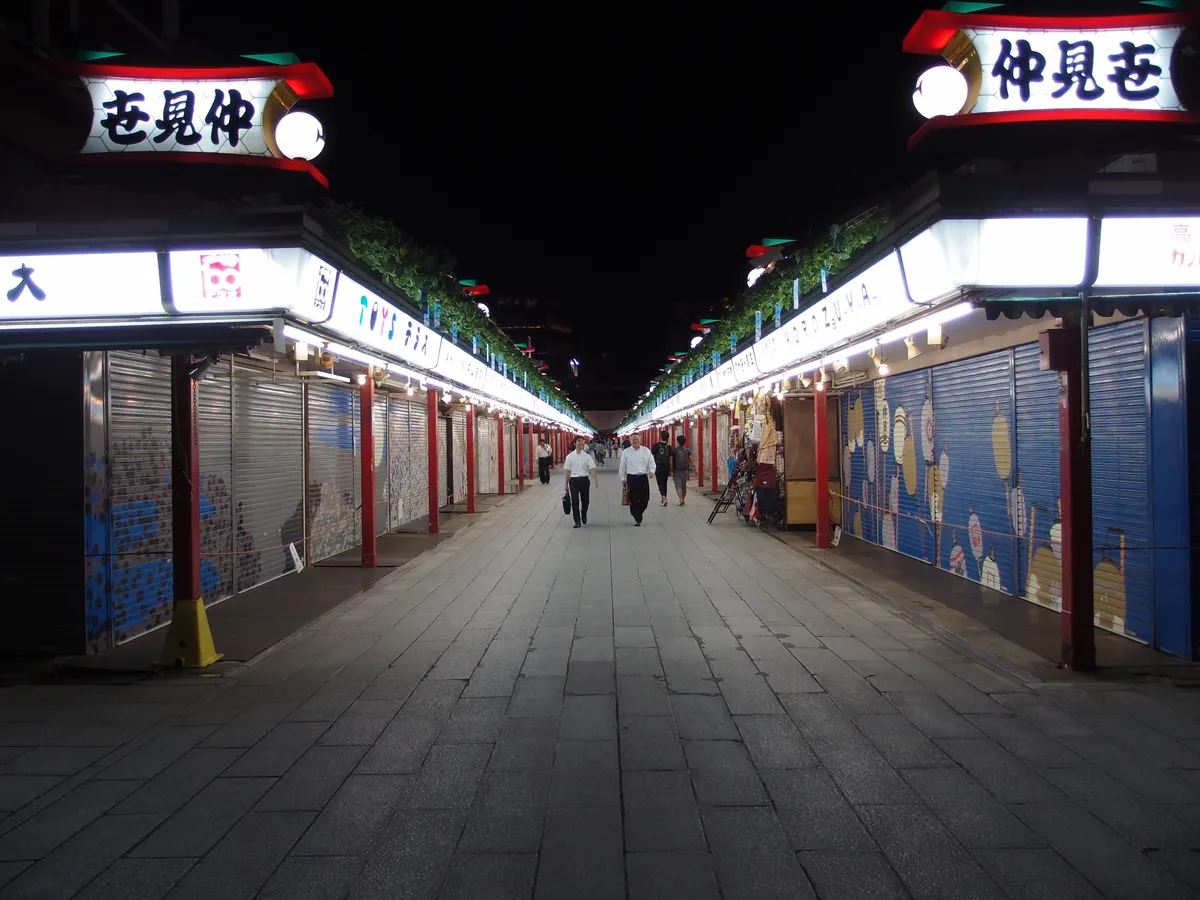
Nakamise. The shopping street that runs to the temple shuts its shutters by early evening. The character of the approach changes entirely; instead of a tourist gauntlet, it becomes a quiet, lantern-lit path. Strolling it after dark is one of the simplest pleasures in the area.
The drinking streets. Asakusa has a genuine old drinking culture that most visitors never see. Look for the small bars and izakaya on the side streets off the main approach and along the Kaminarimon-dori - mom-and-pop places that have been running for decades. The Rokku district, a block or two south-east of the temple, is the historical entertainment quarter and holds several of these.
The river. The Sumida riverbank, a few minutes’ walk west of the temple, has a strip of restaurants and bars with views of the river and the Asahi building. In summer, the outdoor seating is one of the better spots in Tokyo for a drink near water.
What it costs
Asakusa is cheaper than central Tokyo’s nightlife.
| Item | Typical |
|---|---|
| Drink at a simple bar | 1,000-3,000 yen |
| Izakaya evening with food | 3,000-6,000 yen |
| Riverfront restaurant meal | 3,000-8,000 yen |
The old bars are mostly cash-only, and many have no written menu. As with the old bars in Osaka, the protocol is cash, a translation app, and pointing at what looks good.
Practical notes
Getting there and back. Asakusa is on the Asakusa and Ginza subway lines, and the Tsukuba Express. Last trains run until roughly midnight; after that, taxis are the option, and a taxi to central Tokyo is long and expensive. Plan the return before the last round.
Foreigner-friendliness. The newer bars and the izakaya near the station are comfortable with visitors. The oldest places are old-fashioned and cash-only, but they are used to curious tourists and the barrier is language, not policy. A smile and a bad attempt at Japanese go a long way.
Combining it. Asakusa is north-east of the main nightlife districts, so it does not naturally combine with a Shinjuku or Shibuya night. Treat it as its own evening - ideally an early one that ends before midnight - rather than a stop on a crawl.
The bottom line
Asakusa’s night is not the Tokyo that party guides describe. It is quieter, older, cheaper, and mostly closed by midnight. That is precisely its value: a Sensoji precinct lit and nearly empty, a Nakamise with the shutters down, and a few genuinely old bars that have not changed in fifty years. If you want one evening that feels like the Tokyo of an earlier era, this is it.
Photo: Senso-ji @ Asakusa at night by Guilhem Vellut, Wikimedia Commons, CC BY 2.0.
Sources: Wikipedia - Sensoji; Wikipedia - Asakusa. District layout and general practice; prices are the working range and always confirm before ordering.
Frequently asked questions
Is Asakusa lively at night?
It is quieter than Shinjuku or Shibuya, but not dead. Sensoji itself is lit and walkable after dark, Nakamise shuts its shutters, and the streets around the station and along the river keep a handful of old bars and restaurants open until about midnight.
Can you enter Sensoji at night?
The temple grounds are open and walkable at night, and the pagoda and main hall are lit. The hall itself closes in the early evening, but the precincts remain accessible and are far less crowded after dark.
What does Asakusa nightlife cost?
The old drinking bars around Asakusa run 1,000-3,000 yen per drink at the simple end, and a meal at a classic restaurant along the river is 3,000-8,000 yen. It is cheaper and less pressured than central Tokyo nightlife.
Are Asakusa bars foreigner-friendly?
The newer bars and the izakaya near the station generally are. Some of the oldest mom-and-pop drinking bars are old-fashioned and cash-only with no menu, but they are used to curious visitors - cash, a translation app and a smile go far.
What is the last train from Asakusa?
The Asakusa and Ginza subway lines run until roughly midnight, and the Tsukuba Express a little later. After that, taxis are the option; the area is north-east of central Tokyo, so a taxi to Shinjuku is long and expensive.

Written by
CHONMAGE
CHONMAGE publishes English-language explanations of Japan's nightlife and adult-entertainment topics. We distinguish sourced legal and operator rules from estimates; venue prices, access policies and eligibility should be checked with the operator before visiting.
Keep reading
.jpg)