Osaka Nightlife: Where Locals Actually Go
Where Osaka locals drink: Tenma, Kyobashi, Fukushima, Nakazakicho, Kitashinchi — with real prices and bar-hopping rules.
Contents
- Dotonbori Is the Tourist Layer
- The Two Osakas: Kita and Minami
- Tenma: The Izakaya Town
- Kyobashi: The Bar Town
- Fukushima: The After-Work Strip
- Nakazakicho: The Retro Quarter
- Kitashinchi: The Upscale Night
- Minami Without the Crowds: Hozenji Yokocho and Sennichimae
- Horie: The Design District’s Early Evening
- How to Bar-Hop Like a Local
- Money, Transport, Language
- Safety
- One Night, the Local Route
- Conclusion
Ask an Osakan where to go at night and you will get a shrug, then a name you have never heard. It won’t be Dotonbori. It will be Tenma, or Kyobashi, or Fukushima — a station, not an attraction. That gap is the whole point of this guide.
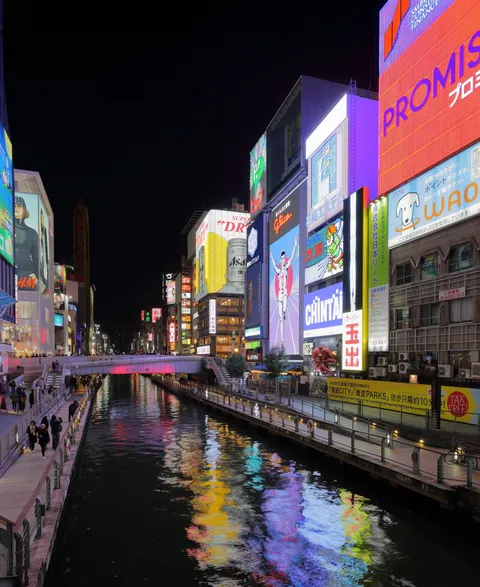
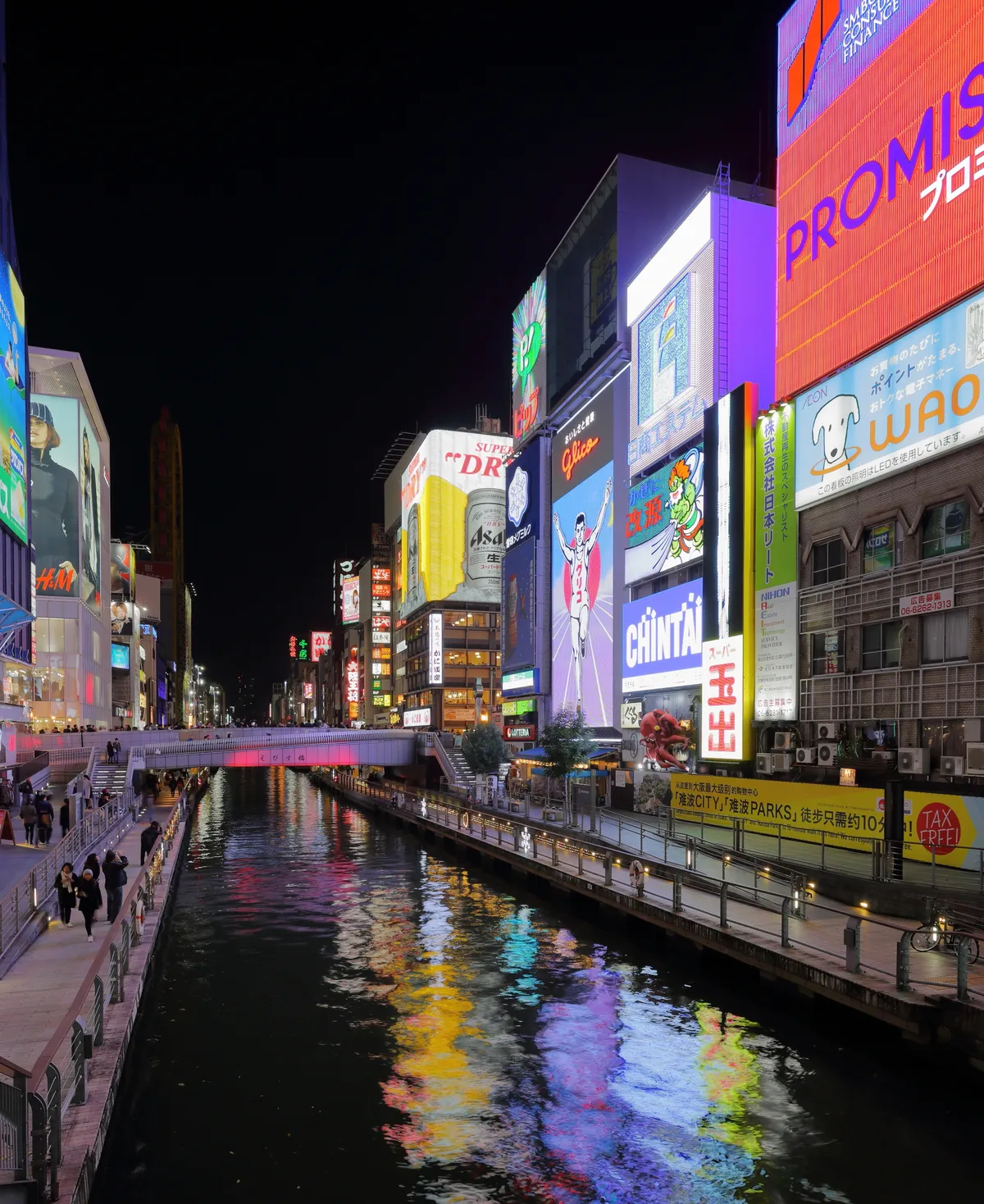
Dotonbori is real and worth seeing. But it is the tourist layer: neon, street food, and crowds three people deep. Locals go there too — with visitors, for a photo of the Glico sign, for one takoyaki — and then they leave. Their actual night out happens a few train stops away, in districts the English-language guides barely mention. This article covers the ones that matter, what they cost, how they work, and how to move between them without fumbling.
- The five districts where Osaka drinks: Tenma, Kyobashi, Fukushima, Nakazakicho and Kitashinchi
- Real price tiers — and which numbers to trust, since most small bars post nothing
- How the Kitashinchi hostess scene is regulated, and what that means for a visitor
- The bar-hopping rules that keep a night smooth, and the last-train math
Dotonbori Is the Tourist Layer
Let’s be precise about Dotonbori, because it deserves its own credit. The canal, the giant mechanical signs, the takoyaki — it’s one of the most spectacular streets in Asia, and our full Dotonbori guide covers it properly.
What it is not is where Osaka drinks. The bars and clubs along the canal and in Amerikamura run on visitors and first dates. The regulars who live here treat it as a destination for a guest, not a weekly habit. If your only Osaka night is Dotonbori, you’ll have a great night — and you’ll also have seen the same version of Osaka that every other tourist saw.
The districts below are where the weekly habit happens. Every one of them is reachable on the same JR Osaka Loop Line that runs behind Umeda, which makes an evening crawl surprisingly easy.
The Two Osakas: Kita and Minami
Osakans organize their city into two poles, and the distinction matters for nightlife.
Kita (“north”) centers on Umeda and Osaka Station. It’s the business half: department stores, office towers, and the terminal for shinkansen and long-distance trains. Around it sit Kitashinchi (the upscale night district), Nakazakicho (the retro quarter), and Fukushima (the after-work strip). North and east of Umeda, the Loop Line reaches Tenma and Kyobashi.
Minami (“south”) centers on Namba and Shinsaibashi. It’s the entertainment half: shopping, theaters, comedy, and Dotonbori itself. The south also holds the pockets the tour groups miss — Hozenji Yokocho, Sennichimae — which we’ll get to.
The practical upshot: most of a “local” night happens on the north side, and one train line connects it. The Loop Line stops at Osaka, Fukushima, Tenma, and Kyobashi in sequence, about four to seven minutes between stations. You can drink in two or three of these areas in a single evening without touching a taxi.
Tenma: The Izakaya Town
Tenma is the answer locals give first when asked where they drink. It’s the neighborhood east of Kita, built around JR Tenma Station on the Osaka Loop Line. From the station’s north exit, a maze of narrow streets and alleys spreads out, and almost every doorway is a bar or a kitchen.
This is Osaka’s working izakaya heart. You get rows of tiny shops — counters with six seats, standing bars (tachinomi), kushikatsu joints, fish shops that cook what they sell. The crowd is students, office workers, and old regulars who have been coming for twenty years. It’s loud, it’s cheap, and nobody is here to see you.
Tenma is also home to Tenjinbashi-suji, the covered shopping street that claims to be the longest in Japan at over two kilometers, and to Osaka Tenmangu Shrine, which hosts the Tenjin Matsuri every July 24–25, one of Japan’s three great festivals. The shrine and shopping street are daytime concerns; the alleys come alive after dark.
How to do it: don’t plan. Walk the alleys off the north exit, look for a curtain (noren) and a counter that’s full but not overflowing, and walk in. Order a beer or a highball and whatever the house is selling — the owner will usually point at what’s good. Eat, drink, pay, and go next door. Two shops an hour is the right pace.
What it costs: this is where numbers get fuzzy, because nobody posts prices. As a rule of thumb, a draft beer runs ¥500–700, a highball a little less, and most small dishes sit between ¥300 and ¥700. Two people with several drinks and a run of plates will land somewhere around ¥3,000–6,000 total. It’s the cheapest serious night out in Osaka.
One daytime note: the Osaka Museum of Housing and Living sits along the shopping street, with a life-size replica of an Edo-period street. It costs ¥600, is open 10:00–17:00, and closes Tuesdays. A fine pre-drink stop if you’re already north.
Kyobashi: The Bar Town
If Tenma is about food, Kyobashi is about drinking. It’s the station area in eastern Osaka where the JR Loop Line, the Katamachi and Tozai lines, Keihan, and the Osaka Metro Nagahori Tsurumi-ryokuchi line all meet — a hub that moves over half a million people a day and is so big it’s called the city’s eastern gateway.
Around the station, shopping buildings (Begin Kyobashi, the Grand Château, KiKi Kyobashi, Keihan Mall) face the tracks, and behind them stretches one of Osaka’s densest clusters of small bars. This is the old-school Osaka scene: mom-and-pop sunakku, standing bars, and five-seat counters run by one owner who has been there since the 1980s. The crowd skews older and more working-class than Tenma, and the vibe is more bar-room than kitchen.
How it differs from Tenma: Tenma you drift through eating. Kyobashi you plant yourself in one bar and talk. Most places seat five to ten people, so you end up chatting with whoever is next to you — this is where the fabled Osaka friendliness actually shows up.
What it costs: comparable to Tenma, maybe a touch cheaper. Watch for the otōshi — a small cover charge that appears with your first drink and covers a snack. It’s standard, not a scam, and it’s how these places make rent.
The catch: almost no English, almost no menus, and no written prices in the old joints. If that sounds intimidating, this is also the point — bring a translation app, order a highball, and smile. That’s the entire social contract.
Fukushima: The After-Work Strip
Fukushima is one stop west of Osaka Station on the Loop Line, about a kilometer from Umeda, and it feels like a small town that a city grew around. Main roads carry offices and high-rises; a block in, it’s a working-class residential district — population just over 15,000 — with its own shopping street (Fukushima Seitengai) and shrine.
Its night scene is exactly what you’d expect from that mix: a relaxed strip of izakaya and bars that fills with office workers after 6 PM and is mostly quiet by midnight. It’s the least dramatic district on this list, and that’s its virtue. The streets are broader and easier to read than Kyobashi’s, the shops are a little more self-explanatory, and there’s a small but real craft beer and wine presence mixed in with the standing bars.
How to do it: walk the main drag off the station, pick an izakaya with an English-friendly menu if you want one, and treat it like dinner out rather than a crawl. Fukushima is a better first stop than Kyobashi if you’re new to this kind of night — you can actually see what you’re getting into.
What it costs: the same band as Tenma. A meal with drinks for two, ¥3,000–6,000.
Nakazakicho: The Retro Quarter
Nakazakicho is the official name for a small area of Kita ward (the neighborhood around Nakazaki-nishi and Nakazaki, which together are called Nakazakicho), a ten-to-fifteen minute walk east of Osaka Station, with its own station on the Osaka Metro Tanimachi Line.
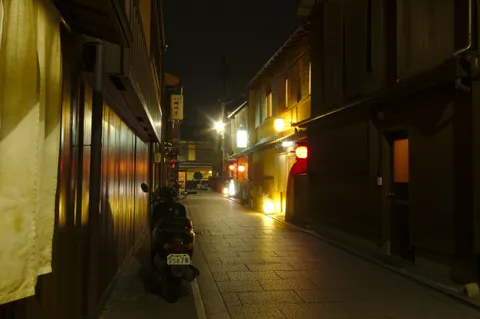
It’s the opposite of Kitashinchi. Old wooden houses and shophouses that survived the redevelopment around them, a web of quiet streets, vintage and second-hand shops, and cafes that spill onto the pavement. At night the pace stays gentle: a handful of small bars and restaurants in converted buildings, nothing neon, nothing loud.
This is not where Osaka parties. It’s where Osaka goes to drink slowly, and it makes the best possible opening move for an evening — a coffee or a quiet beer before you hit Tenma. One honest caveat: places here are small, often closed on unexpected days, and the scene changes year to year. Treat it as atmosphere, not a checklist.
Kitashinchi: The Upscale Night
Kitashinchi is Osaka’s high-end night district, tucked between Umeda and the Dojima river just south of Osaka Station. Japanese media compare it to Tokyo’s Ginza, and the comparison is fair: narrow blocks of expense-account restaurants, ryotei, bars, lounges, and hostess clubs, all aimed at business entertainment rather than tourists.
It has no soaplands and no pachinko. What it has is taxis — the area is famously full of them around 8 PM, when the clubs open, and cars are actually barred from the inner blocks between 22:00 and 1:00. The nearest stations are JR Kitashinchi on the Tozai line and Nishi-Umeda on the Yotsubashi line, but the local habit is to taxi in.
The price tiers are real, and they matter. As a rough guide, a snack — a small hostess bar where staff don’t sit with you — runs around ¥10,000 a visit. A lounge, where hostesses sit and chat, runs ¥20,000–30,000. A high-end hostess club is ¥50,000 or more. These are not the same thing as a bar; you are paying for the room, the service, and the entertainment, and a night here is a corporate expense, not a casual drink.
The legal frame, briefly. Hostess clubs (kyabakura) and host clubs both sit under the entertainment food-and-drink business category of the Entertainment Business Act (風営法). They need a license from the prefectural public safety commission, they can’t admit anyone under 18, their hours are capped by prefectural ordinance (roughly 1 AM in Osaka), and street solicitation is banned nationally since a 2005 amendment. None of this is the sex industry — that’s regulated separately — it’s conversation and drinks. Our host club guide covers the male-counterpart industry in full.
What that means for a visitor. Kitashinchi is worth walking through — the atmosphere is like nothing else in Osaka — but casual foreign walk-ins are not really a thing at the hostess clubs, many of which work by introduction. Touting got bad enough that Osaka designated the whole district a priority area under its anti-touting ordinance in 2018, so the usual rule applies doubled: anyone who approaches you on the street is the person you should be avoiding. The practical move is to have dinner at one of the district’s counter restaurants — there are some genuinely excellent ones — and leave the clubs to people who were invited. If you want the host/hostess experience on a tourist’s terms, the host club guide explains the first-visit discount routes.
Minami Without the Crowds: Hozenji Yokocho and Sennichimae
The south side has its own local pockets, hiding in plain sight next to Dotonbori’s chaos.
Hozenji Yokocho is a narrow stone alley off Dotonbori that runs past the temple it’s named after. Hozenji itself is a Jodo-sect temple founded in 1637, and its star is the Mizukake Fudo — a small statue so often splashed with water by worshippers that it’s grown a thick coat of moss. In the March 1945 Osaka air raids, the whole area burned; the statue survived. The alley was made famous by novelist Oda Sakunosuke’s Meoto Zenzai, set here in the 1930s, and today it’s a lane of tiny restaurants and bars under lanterns, a minute from the Glico sign but a world away in noise. If you’re staying in Minami, this is the closest thing to a local night.
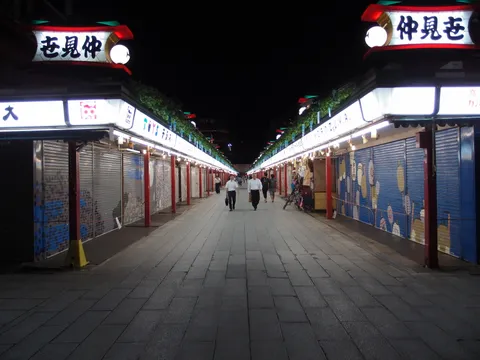
Sennichimae, next door, is the old theater and entertainment quarter — the traditional home of Osaka comedy, including the Yoshimoto organization that trained generations of manzai duos. It’s rougher than Dotonbori, more ordinary, and genuinely interesting after dark.
Both are ten minutes on foot from Namba Station, and both get a mention in our Dotonbori guide — the tourist version of the area — if you want the full picture of the south side.
Horie: The Design District’s Early Evening
Across the Dotonbori River to the west lies Horie, in Osaka’s Nishi ward, split into North and South Horie. Its main street, Orange Street (formally Tachibana-dori), was once the city’s furniture quarter; in the 1990s the shops gave way to cafes, select stores, and design studios, and the area turned into Osaka’s nearest thing to Tokyo’s Daikanyama.
The nightlife here is early and mellow — coffee by day, wine and small plates by evening, a few quiet bars. It’s less a destination for late drinking and more the best neighborhood in the south for a slow dinner that starts at six. Stations: Nishi-Ōhashi, Yotsubashi, and Sakurakawa. Pair it with Hozenji across the river for a south-side evening that never touches the crowds.
How to Bar-Hop Like a Local
The districts are only half of it. The rules of the night are the other half.
Know the difference between the formats. An izakaya is a pub — food and drink, order as you go, leave when you’re done. A sunakku or small bar is for drinking and talking; you’ll get an otōshi cover snack with your first order. Standing bars are the cheapest and fastest of all. Match your order to the format and you can’t go wrong.
Order food with your drinks. Drinking on an empty stomach at an izakaya is a beginner’s move. One rule from the food culture carries over everywhere: never double-dip your kushikatsu into the communal sauce.
Cash is the default. The mom-and-pop bars in Kyobashi and Tenma are cash-only, often with no written menu and no English. Carry ¥10,000–20,000 for a full evening and you’ll never be stuck. Translation apps are fine for menus; for the old bars, pointing and smiling works.
Don’t split the bill at the counter. Osaka small bars will happily divide a check by head, but two or three people splitting one bill item by item gets messy. Pay for your own round, or let one person pick up and settle up outside.
Mind the last train. Osaka Metro runs until roughly midnight to 12:30 AM; the JR Loop Line a little later. After that, taxis get expensive fast. If you miss it, the standard fallback is a love hotel — cheaper than a taxi home and a completely normal way to end a night in this country.
Skip the chain formula when you can. Osaka’s big izakaya chains are fine and cheap — their all-you-can-drink (nomihodai) sets are a genuine local habit for groups — but the night you’ll remember is the one in a six-seat bar where the owner is also the cook.
Money, Transport, Language
Budget. A local-area evening — a stop in Nakazakicho or Fukushima, dinner in Tenma, a crawl through Kyobashi — runs about ¥5,000–8,000 per person with drinks. Kitashinchi is a separate budget category entirely (see above). Card acceptance is common at chain izakaya and newer places, nonexistent at the old bars.
Transport. The JR Osaka Loop Line is the spine: Osaka Station → Fukushima → Tenma → Kyobashi, each a few minutes apart. From Namba (Minami) to Kyobashi, the loop or the Midosuji Line to Umeda plus one transfer takes about 20 minutes. An IC card (ICOCA, Suica, or a phone wallet equivalent) makes all of this painless.
Language. A handful of phrases carry the whole night: osumikiri isn’t needed, but “osu-sume wa nan desu ka” (what do you recommend?), “biiru kudasai” (beer please), and “kanpai” (cheers) cover 90 percent of interactions. Osaka people are famously talkative; a smile and a bad attempt at Japanese will get you further than perfect English.
Safety
Osaka is one of the safer big cities in the world, and these districts are ordinary working-class neighborhoods, not trap zones. The realistic risks are few:
- Street touts. The one real scam vector, mostly around Dotonbori, Namba, and Kitashinchi. Anyone who approaches you to sell a night out is not a legitimate venue’s employee. Walk past. This is the same advice we give for Kabukicho in Tokyo, and it applies on the south side of Osaka just as hard.
- Last-train mistakes. Not a safety issue so much as an expensive one. Check your train times before the last round.
- Drunk locals. Kyobashi at 1 AM has its share of unsteady regulars. They’re harmless; don’t be one of them with a long taxi ride home.
For the areas the guidebooks do cover — Shinsekai, Tobita Shinchi, the red-light districts south of the center — our Osaka red light district guide has the practical detail.
One Night, the Local Route
If you want a single evening that does all of this, here’s the route.
17:30 — Nakazakicho. A coffee or a quiet first beer in the retro quarter while it’s still light.
19:00 — Tenma. Dinner at an izakaya off the station’s north exit. Order the highball and whatever the owner points at. Two hours, several plates, done.
21:00 — Kyobashi. Take the Loop Line one stop (or the Katamachi line — it’s the same direction) and work the alleys behind the shopping buildings. Plant yourself in one bar, talk to your neighbor.
23:30 — Late food. Kushikatsu or late ramen somewhere between the bars and the station, then decide whether the last train is worth making. If it isn’t, the love hotel option is always there.
Swap Fukushima in for Kyobashi if you want an earlier, calmer end. Swap Hozenji for the whole crawl if you’re based in Minami. The point isn’t the itinerary — it’s that none of it touches Dotonbori’s crowds.
Conclusion
Osaka’s nightlife isn’t a single street you cross off a list. It’s a handful of working-class districts where the same people go week after week, and each one has a different personality: Tenma feeds you, Kyobashi pours your drinks, Fukushima lets you land softly, Nakazakicho slows you down, and Kitashinchi shows you what the city looks like when money is no object.
None of them needs a reservation, a guide, or a plan beyond cash and a train card. The door policies are simple: if the curtain’s up and there’s a seat, you’re welcome. That’s the whole trick.
So skip one round of the takoyaki queue and ride the Loop Line east instead. Kanpai.
Photo: Dotonbori, Osaka, at night by Martin Falbisoner, Wikimedia Commons, CC BY-SA 4.0.
Sources: Japan-guide — Tenma; Wikipedia — Kyobashi, Osaka; Wikipedia — Kitashinchi; Wikipedia — Fukushima, Osaka; Wikipedia — Horie, Osaka; Wikipedia — Hozenji; Wikipedia — Entertainment and Amusement Business Act.
Frequently asked questions
Where do locals actually go for nightlife in Osaka instead of Dotonbori?
Tenma for izakaya, Kyobashi for tiny retro bars, Fukushima for relaxed after-work drinking, Nakazakicho for quiet cafes and bars, and Kitashinchi for upscale hostess clubs and restaurants.
How much does a night out cost in Osaka's local bar areas?
A casual izakaya night in Tenma, Kyobashi or Fukushima — a few drinks plus dishes — typically lands around ¥3,000-6,000 per person. Kitashinchi is another bracket: roughly ¥10,000 at a snack, ¥20,000-30,000 at a lounge, and ¥50,000 or more at a high-end hostess club.
Do Osaka's local bars welcome foreign customers?
Small bars and izakaya in Tenma, Kyobashi and Fukushima generally take walk-ins regardless of nationality, but the staff rarely speak English and many places are cash-only. Hostess clubs and lounges in Kitashinchi are different and often work by introduction.
What time do Osaka's local bars close?
Most izakaya and bars in Tenma, Kyobashi and Fukushima wind down around midnight to 1 AM. Licensed hostess venues close by about 1 AM, with exact hours set by Osaka's prefectural ordinance under the Entertainment Business Act.
Is Osaka's local nightlife safe for tourists?
Yes. These are working-class drinking districts, not scam zones. The one rule that matters is the national one: never follow a street tout, which is also why Osaka tightened touting rules in Kitashinchi in 2018.

Written by
CHONMAGE
CHONMAGE publishes English-language explanations of Japan's nightlife and adult-entertainment topics. We distinguish sourced legal and operator rules from estimates; venue prices, access policies and eligibility should be checked with the operator before visiting.
Keep reading