Kyoto Nightlife: What Actually Happens After Dark in the Old Capital
Kyoto closes early by Tokyo standards, and the nightlife that exists is concentrated — Gion, Pontocho, Kiyamachi, and a few bar streets near the station. Where to go, what it costs, and what a visitor should expect.
Contents
import { Image } from ‘astro:assets’; import gionNight from ’../../assets/heroes/gion-night.jpg’;
Kyoto is the city that everyone visits for the daytime temples and nobody writes honestly about the night. The honest version: Kyoto’s nightlife exists, it is concentrated in a few districts, and it closes early by Tokyo standards. That is not a flaw; it is the character of the place, and knowing it in advance is the entire difference between a good night and a confused one.
Where Kyoto’s night actually is
Four districts carry almost the whole thing.
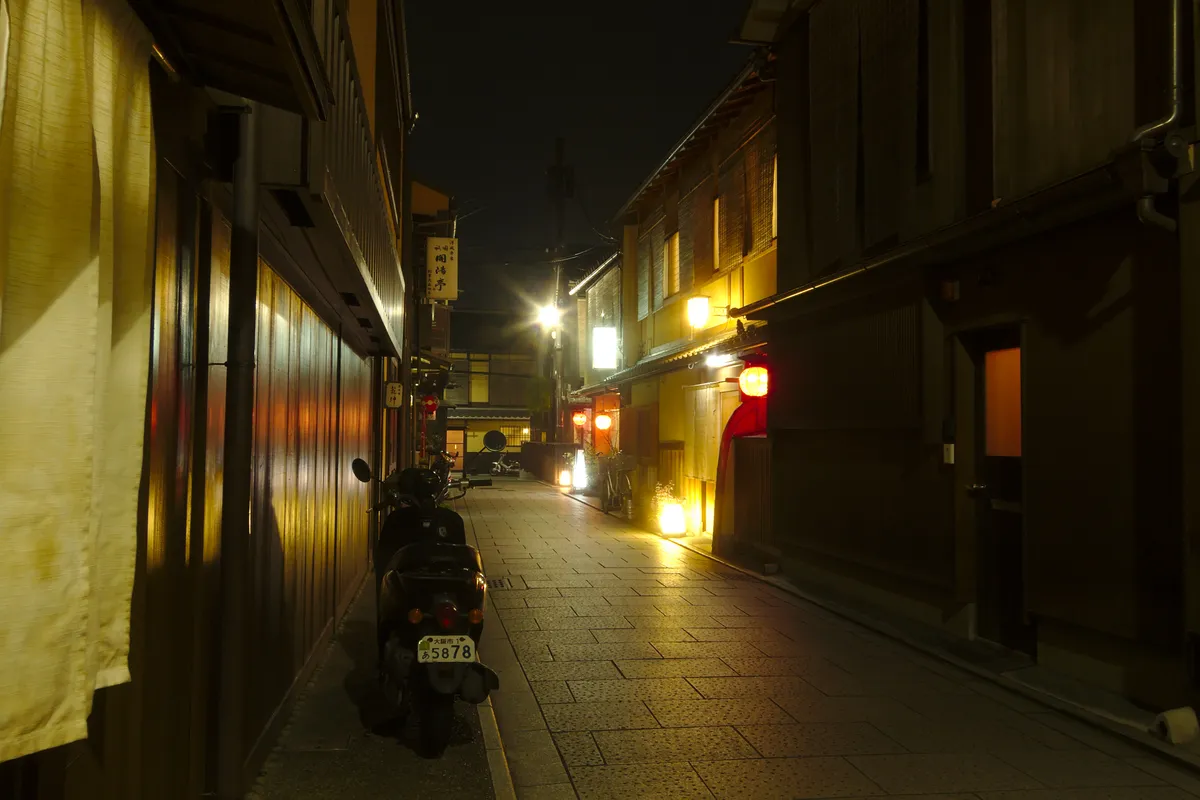
Gion. The city’s most famous night district, in the sense that the geisha districts are part of it. The Hanamikoji and Shirakawa streets are lined with ryotei (traditional restaurants) and ochaya (teahouses), many of which work by introduction and do not admit walk-ins. Walking through at night is beautiful and free; getting seated at an ochaya is not something a visitor can usually just do. The area has posted signs asking tourists not to chase or touch geisha on the street, and the request should be taken seriously.
Pontocho. A single narrow alley between Kamo River and the main street, about a five-minute walk from Gion. It is dense with restaurants and small bars, several with river-view terraces in summer. More of it is open to walk-ins than Gion, but the upscale end is reservation territory. This is the best single street in Kyoto for a memorable dinner with a bar afterward.
Kiyamachi. The riverfront strip running north of Shijo, a few blocks west of Pontocho. This is where the casual scene lives: izakaya, bars, standing bars, small clubs. It is the closest thing Kyoto has to a “going out” street, and the most foreigner-accessible of the four.
Around Kyoto Station. A newer, more scattered scene of casual bars and izakaya, useful if you are staying near the station and want a low-effort night. Not a destination on its own.
What it costs
The usual two-bracket structure applies, the same as Osaka.
| Bracket | What | Typical spend |
|---|---|---|
| Casual | Kiyamachi izakaya and bars | ¥3,000–¥6,000 |
| Mid | Pontocho restaurant with drinks | ¥8,000–¥15,000 |
| High | Gion ryotei / ochaya | ¥20,000+ (often by introduction) |
The small bars in Kiyamachi are mostly cash-only and rarely post menus — the same convention as the Tenma and Kyobashi bars in Osaka, and the same solution: cash, a translation app, and pointing at what looks good.
The geisha question
Worth addressing directly, because it is what most visitors actually wonder about. You are unlikely to see a geisha on the street by waiting, and you cannot simply book an ochaya as a walk-in. The modern reality is that most geisha work is arranged through regular customers, and the entertainment is expensive and formal.
What a visitor can reasonably do:
- Walk Gion and Pontocho at night for the atmosphere — that is the real spectacle
- Attend a public cultural performance, if the timing aligns
- Skip the street-chasing behaviour entirely
There is no legitimate “geisha experience” that involves approaching performers on the street, and the area’s signs exist because the problem got bad enough to need them.
Practical notes
Closing times. Kyoto winds down earlier than Tokyo. Most casual bars are done by midnight to 1 AM; the street scene is quiet by 1:30. The subway runs until roughly midnight, JR a little later.
Taxis. After the trains stop, taxis are the realistic option. Kyoto is compact — a taxi across the central area is short — but night fares add up, and the supply around the bar districts thins late.
Etiquette. The one rule that matters in Gion: do not block the narrow alleys, do not chase performers, and do not enter an ochaya uninvited. In Kiyamachi the usual bar rules apply — shower before anything serious, cash in an envelope, no photos inside a small bar.
Combining with the rest of the trip. Kyoto pairs naturally with the Osaka local nightlife guide, since Osaka is thirty minutes by train and stays open later. A common pattern is Kyoto by day, Osaka for the late night — the two cities are different halves of one region.
The bottom line
Kyoto’s night is not Tokyo’s, and it is not supposed to be. It is concentrated in Gion, Pontocho and Kiyamachi, it closes early, and its most famous venues work by introduction. Go for the atmosphere of the old streets, eat well in Pontocho, drink casually in Kiyamachi, and take the geisha question off the table. That is a genuinely good Kyoto night.
Photo: Gion at night by Adrián Pérez, Wikimedia Commons, CC BY-SA 2.0.
Sources: Wikipedia — Gion; Wikipedia — Pontochō; Wikipedia — Kiyamachi. District layout and general practice; prices are the working range and always confirm before ordering.
Frequently asked questions
Is there nightlife in Kyoto?
Yes, but it is concentrated and it closes earlier than Tokyo. The main districts are Gion, Pontocho, Kiyamachi and the areas around Kyoto Station. Most bars wind down by 1 AM, and the traditional geisha districts are quiet by any standard.
Where do locals go out in Kyoto?
Kiyamachi is the riverfront strip of bars and restaurants, Pontocho is the narrow alley of upscale dining and small bars, and Gion holds the traditional and high-end venues. Around Kyoto Station there are newer, more casual bars.
How much does a night out in Kyoto cost?
A casual bar or izakaya evening runs ¥3,000–¥6,000 per person. Pontocho restaurants and Gion ryotei are a different bracket — ¥10,000–¥30,000 or more. As in Osaka, the smaller the bar, the more likely it is cash-only.
Do Kyoto bars welcome foreign visitors?
The casual bars around Kiyamachi and the station generally do. Gion is more guarded: many ryotei and ochaya work by introduction and do not admit walk-ins, and the area has signs asking visitors not to chase geisha on the street.
What is the last train in Kyoto?
The subway runs until roughly midnight; JR lines run a little later. After that, taxis are the realistic option. Kyoto is compact, so a taxi across the city is short but not cheap at night.

Written by
CHONMAGE
CHONMAGE publishes English-language explanations of Japan's nightlife and adult-entertainment topics. We distinguish sourced legal and operator rules from estimates; venue prices, access policies and eligibility should be checked with the operator before visiting.
Keep reading
.jpg)