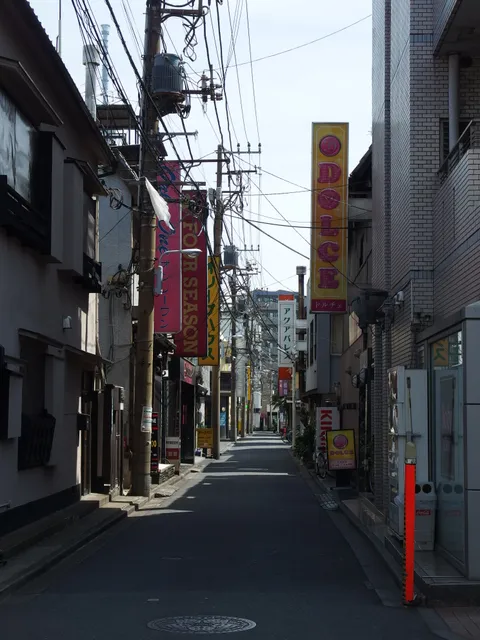
Is Prostitution Legal in Japan? The Law, Explained Without the Myths
Japan’s Anti-Prostitution Law bans one specific act — and legalises an entire industry around it. Here is exactly what the law says, why soaplands exist, and what it means for you.
Contents
This question gets answered badly in English more often than almost anything else about Japan. You’ll see “it’s illegal but tolerated,” “it’s legal,” and “there’s a loophole” — three answers that are each partly right and, taken alone, all misleading.
The real answer is more interesting, and once you see the structure, everything else about Japan’s adult industry makes sense.
- Exactly what the Anti-Prostitution Law bans — and what it leaves legal
- Why soaplands operate legally under the bathing-facility structure
- What the law means for a foreign visitor, and what is a real risk
The short answer
Prostitution is illegal in Japan. It is also defined so narrowly that a large, legal, tax-paying, openly-advertised adult industry operates around it.
The definition is the whole story. So let’s go to the text.
What the Anti-Prostitution Law actually says
The Anti-Prostitution Law (売春防止法) was passed in 1956 and took full effect in 1958, closing the licensed brothel districts that had operated until then. Its central definition is unusually specific: prostitution means sexual intercourse in exchange for compensation.
Three consequences follow immediately, and they explain almost everything:
1. Only intercourse is covered. Any other paid adult service falls outside the definition entirely. That is not an oversight anyone has since corrected — it’s been the operative boundary for nearly seventy years, and the entire fuzoku industry is built precisely along it.
2. The law targets the surrounding activity, not the pair. The provisions with criminal penalties attached are aimed at solicitation in public, procuring, coercion, contracting, and providing or operating premises. The two individuals in the basic act are not given a criminal penalty by this law. That’s a deliberate structure — the drafters were aiming at the organised business, not at the individuals.
3. Regulation, not the criminal code, does the day-to-day work. The Act on Control and Improvement of Amusement Business (風営法) is the law that actually governs how adult businesses operate: registration with the prefectural public safety commission, permitted hours, permitted areas, signage rules, age verification. Registered adult businesses are, in the ordinary sense, legal businesses. They have registration numbers. They pay tax. They are inspected.
Why “loophole” is the wrong word
English coverage loves the word loophole. It implies something furtive and unnoticed.
Nothing here is unnoticed. Businesses register with the police. Prices are advertised on the open internet. The boundary — no intercourse — is printed in bold on operators’ own websites, because stating it is part of staying legal. Local governments zone where these businesses may operate. This is a regulated industry operating in daylight within a line the legislature drew and has chosen not to move.
“Narrow statutory definition, deliberately maintained” is a better description than “loophole.”
The soapland structure
Soaplands are where people usually get stuck, so here it is directly.
A soapland is registered as a bathing facility. The customer pays the business a fee for use of the bath. What may then occur between two adults in that private room is framed as their own private matter, not a service the business sold.
Whether you find that convincing as a legal argument is beside the point — it has been the working arrangement for decades, it is understood by everyone including the authorities, and the district that runs on it, Yoshiwara, has operated continuously in plain sight. See our soapland guide for how this looks in practice.
What the industry looks like inside the line
The result is a large, differentiated, entirely above-ground industry:
- Deriheru — outcall services delivering to hotel rooms. The largest category by volume. How it works.
- Fashion health, hotel health — shop-based and love-hotel-based services.
- Pink salons, onakura — the budget end.
- Soaplands — the premium end, under the bathing-facility structure.
The full map of categories, with prices: fuzoku types explained.
Sitting alongside but legally separate are the drinking businesses — kyabakura (hostess clubs), host clubs, girls bars — where you pay for time, conversation and drinks. No adult services, different regulation, and a completely different set of ways to spend too much money. Host clubs explained.
Where the law is genuinely hard
None of the above should be read as “anything goes.” The lines Japan enforces seriously are these:
Anyone under 18. This is the absolute one. Offences involving minors are prosecuted hard, sentences are real, and “I thought they were older” protects nobody. Every legitimate business verifies age on both sides for exactly this reason.
Coercion and trafficking. The Anti-Prostitution Law’s penal provisions target procuring, coercion and contracting people into prostitution. Japan has faced sustained international criticism over enforcement here — particularly around the JK business and scouting practices — and enforcement has been tightening.
Street solicitation. Public solicitation is specifically prohibited, which is why the industry’s front door is a booking system rather than a pavement.
Unregistered operation. Running an adult business without registration, or outside permitted hours or zones, is an offence against the operator.
Immigration law. Foreign nationals working in this industry without the right status face deportation, and this is enforced.
What this means for you as a visitor
Practically, the criminal law is not your main exposure. Your actual risks are these:
- Touts. Following someone who approaches you on the street in Kabukicho or Roppongi is how visitors lose serious money — an unpayable bill, and difficulty leaving. Legitimate businesses never recruit on the pavement. The Kabukicho guide covers how the approach is scripted.
- Operators lying about the boundary. Anything advertising what the law prohibits is unregistered. An operator lying about its legal status is lying about everything else too.
- Age. If anything about a situation makes you unsure whether everyone involved is over 18, that situation ends immediately. No exceptions, no benefit of the doubt.
- Visa consequences. For residents rather than tourists, a conviction can end your status in Japan. The stakes are simply higher for non-citizens.
A note on the history
The 1956 law didn’t create the current shape from nothing — it reorganised it. Japan had licensed districts (yūkaku) for centuries; Yoshiwara was established in the 1600s. Post-war, the RAA and then the akasen districts operated under official sanction until the law closed them. The businesses adapted to the new definition rather than disappearing, and the modern category system is the direct descendant of that adaptation.
Which is why Japan’s red light districts look the way they do today: not as a break from the past, but as a continuation of it under a narrower rule.
The one-line version
Japan bans a single defined act, penalises the organised activity around it, and regulates everything else as a licensed industry. Once you have that sentence, nothing about Kabukicho, Yoshiwara or the deriheru business is confusing any more.
Related reading
Frequently asked questions
Is prostitution legal in Japan?
No. The Anti-Prostitution Law of 1956 prohibits prostitution, which it defines specifically as sexual intercourse in exchange for payment. However, the law does not attach criminal penalties to the two individuals in the basic act itself, and it does not cover paid adult services other than intercourse — which is why a large regulated adult industry operates legally alongside it.
Why are soaplands legal then?
Soaplands are registered as bathing facilities. The customer pays the business for use of the bath, and anything further is framed as a private matter between two consenting adults rather than a service sold by the business. This structure has been the industry norm for decades.
Can a customer be arrested in Japan?
The Anti-Prostitution Law targets solicitation, procuring, coercion and the operation of premises rather than the customer in the basic act. Customers are, however, exposed to other offences — most seriously anything involving a person under 18, which is prosecuted severely regardless of what the customer believed.
What is the legal age?
Eighteen, on both sides, without exception. Involvement with anyone under 18 is a serious criminal offence in Japan, and belief that the person was older is not a defence that reliably protects anyone.
Is it illegal for foreigners specifically?
The law applies equally regardless of nationality. Foreign residents should be aware that criminal convictions can affect visa status and re-entry, so the practical consequences of getting this wrong are heavier for non-citizens.

Written by
CHONMAGE
CHONMAGE publishes English-language explanations of Japan's nightlife and adult-entertainment topics. We distinguish sourced legal and operator rules from estimates; venue prices, access policies and eligibility should be checked with the operator before visiting.
Keep reading