Tokyo Escort Guide: How It Actually Works for Foreigners (2026)
What “escort” really means in Tokyo, what the law permits, what an hour costs in yen, and why most services refuse foreign customers — plus how to book one that does not.

Contents
- What “escort” means in Japan (and what it doesn’t)
- The legal position, stated plainly
- Why so many services refuse foreigners
- What it costs, honestly
- The scams, and how they actually work
- How to actually book one, step by step
- Where you can and can’t be delivered
- Etiquette that makes the difference
- So which route should a visitor take?
- Related reading
Search “Tokyo escort” and you get two kinds of result: sites that are clearly scraping each other, and sites that are clearly a scam. Neither tells you the thing you actually need to know, which is that the word “escort” does not map cleanly onto anything in the Japanese industry, and that misunderstanding is why so many visitors end up either overpaying, standing outside a shop that will not let them in, or unknowingly approaching something illegal.
So let’s do this properly. Here’s what the industry is, what the law says, what it costs, and where the foreigner problem actually comes from.
- What "escort" actually maps to in the Japanese industry — and what it does not
- What the law permits, what is illegal, and the real risks
- Real prices in yen, and how to tell a licensed service from a scam
What “escort” means in Japan (and what it doesn’t)
In English, “escort” is a catch-all. In Japan it isn’t a category at all. The Japanese-language industry — collectively fuzoku (風俗) — is split into specific business types, each with its own legal registration, its own price range, and its own rules about what can and can’t happen.
The closest thing to the Western idea of an escort is deriheru (デリヘル), short for “delivery health.” It’s an outcall service: you book, and someone comes to your hotel room or a partner venue for an agreed length of time. No shop to walk into, no district to hunt around in. That’s the format most visitors are actually looking for when they type “escort.”
What it is not is a discreet arrangement for full sex. That’s the part almost every English-language page gets wrong, and it matters legally, so it gets its own section.
A useful mental correction: stop translating “escort” as “prostitute” and start translating it as “booked companionship with a defined, legally-bounded service menu.” That’s much closer to the reality.
The legal position, stated plainly
Two laws matter.
The Anti-Prostitution Law (売春防止法, 1956) prohibits prostitution, which it defines narrowly as sexual intercourse in exchange for payment. Note the narrowness — that definition is the hinge the entire industry turns on.
The Act on Control and Improvement of Amusement Business (風営法, usually just fūeihō) regulates everything else. Adult businesses register under it as either shop-based or non-shop-based sex-related special businesses. Deriheru is the non-shop-based category. Registration is with the prefectural public safety commission — which is to say, with the police.
Put those together and you get the actual rule: a registered fuzoku business may legally provide a range of paid adult services, but not intercourse. That’s not a loophole anyone is being coy about; it is printed on the operators’ own sites, usually in bold.
A few consequences worth internalising:
- A service that openly offers full sex is not a legal business, whatever its website looks like. Walk away.
- The customer is not the party the law is aimed at, but that’s cold comfort — the real risks to you are financial and personal, not prosecutorial.
- Everyone involved must be 18 or over, on both sides of the transaction, without exception. Any operation that is vague on this is one you should have nothing to do with.
If you want the full breakdown of what the Anti-Prostitution Law does and doesn’t cover, we’ve written that up separately: is prostitution legal in Japan?
Why so many services refuse foreigners
This is the wall almost every visitor hits, and it is worth understanding rather than resenting.
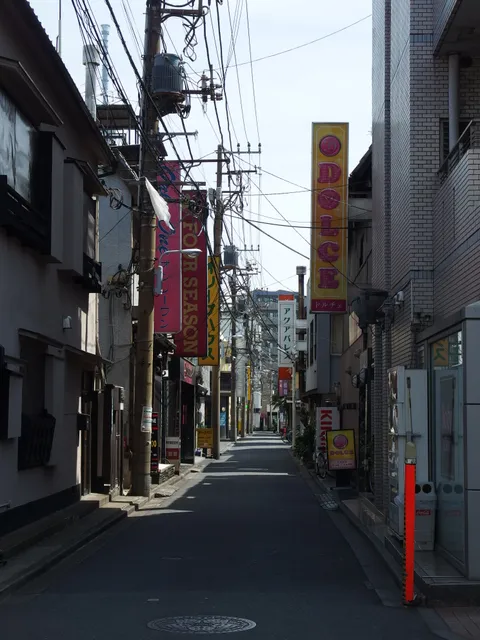
Walk past the shopfronts in Kabukicho and you’ll see 外国人の方はご利用いただけません — “foreign customers cannot be served” — on a surprising number of them. It reads as bluntly xenophobic. The actual reasons are more boring and more fixable:
- Language. The booking is a phone call in Japanese. The confirmation is in Japanese. If something goes wrong mid-booking, the staff have to resolve it in Japanese, fast. A shop with no English-speaking staff genuinely cannot run that process.
- Rule communication. Every service has a hard boundary about what is and isn’t on the menu. If the customer can’t be told where the line is, the shop is exposed — legally and to its own staff.
- Payment and no-shows. Cash-only, in yen, on arrival. A tourist without cash on hand at 1am is a real operational problem.
- The hotel problem. Deriheru requires a venue that permits visitors. Guessing wrong about a tourist’s hotel wastes an hour and a driver.
Notice that every one of those is a process problem, not a prejudice problem. Which is exactly why the services built for foreign customers — English site, English menu, online booking instead of a phone call, published pricing, known hotel list — simply don’t have this issue. They solved the process.
What it costs, honestly
Prices vary by service tier, time of day and how long you book. These are realistic 2026 ranges for Tokyo outcall, not the best-case number on a banner ad:
| Line item | Typical range | Notes |
|---|---|---|
| 60-minute course | ¥18,000–¥28,000 | The standard entry course at most services |
| 90-minute course | ¥25,000–¥38,000 | Better value per minute; the common choice |
| Transport fee | ¥1,000–¥4,000 | Scales with distance from the service’s base area |
| Nomination (指名) | ¥2,000–¥5,000 | Requesting a specific person rather than whoever’s free |
| Late-night surcharge | ¥1,000–¥3,000 | Roughly after midnight, varies by shop |
| Hotel room | ¥6,000–¥15,000 | Only if you’re using a love hotel rather than your own room |
So a realistic all-in for a 90-minute booking at a mid-tier service, with a nomination, in central Tokyo: around ¥30,000–¥45,000. If a site is quoting you ¥9,800 for 90 minutes, that number is the bait and the real total arrives later.
Two habits will protect you here. First, get the total before you confirm — not the course price, the total including transport and any fees. A legitimate service will give it to you without hesitating, because they’d rather tell you now than argue at the door. Second, have the cash. Card acceptance has improved but is still not universal, and “I’ll find an ATM” at 2am is how a pleasant evening becomes a bad one.
The scams, and how they actually work
The genuine risk to a visitor is almost never the police. It’s this:
The street tout. Someone approaches you in Kabukicho or Roppongi, speaks good English, and offers to take you somewhere. Do not go. This is the single most common way foreigners lose serious money in Tokyo, and the mechanism is well documented: an unpayable bill appears, and leaving becomes difficult. Legitimate businesses in this industry do not recruit from the pavement. Not ever.
The bait price. A site advertises a course price that excludes transport, nomination, “designation,” extension and a service charge, none of which are optional in practice.
The fake listing. A directory page for a service that doesn’t exist, harvesting your details or your deposit. If a service asks a first-time customer to send money in advance, that’s your answer.
The wrong-boundary service. Anything promising what the law prohibits. Beyond the legal issue, an operator lying about that is lying about everything else too.
The Kabukicho tout scene deserves its own read if you’re heading there: our Kabukicho guide covers which streets they work and how the approach is scripted.
How to actually book one, step by step
- Pick a service that publishes in English. Not a directory, not an aggregator — the operator’s own site. If the English is machine-translated gibberish, that tells you how much of a foreign-customer process actually exists behind it.
- Check the coverage area and hotel policy first. Before anything else. If they can’t come to where you’re staying, nothing else matters.
- Read the menu and the boundary. Every legitimate service states what is and is not included. Read it. Knowing the line in advance is the single best thing you can do for the experience.
- Book with time in hand. Same-hour requests get you whoever is free. An hour or two of notice gets you an actual choice, and evenings from about 8pm are the busiest window.
- Confirm the total in writing. Course + transport + nomination + any surcharge. One number.
- Have the cash ready in an envelope. It’s the local convention and it makes the first two minutes frictionless.
- Be sober enough to be a good customer. Services can and do refuse visibly drunk customers, and you’ll have paid the transport fee for the privilege.
Where you can and can’t be delivered
This trips people up more than price does.
- Love hotels — always fine. Designed for it.
- Business hotels (APA, Toyoko Inn, Sotetsu Fresa and similar) — usually fine, though some have tightened up. Front desks generally don’t interrogate visitors.
- Upmarket and international-brand hotels — often not. Some will stop a visitor at the lobby. If you’re at the Park Hyatt, plan around it.
- Airbnb and private rentals — depends entirely on the building, and you’re the one holding the risk with the host.
- Capsule hotels, hostels, dorms — no. Obviously no.
If you’re unsure, ask the service. They deliver in that neighbourhood every night and they know exactly which front desks are relaxed and which aren’t.
Etiquette that makes the difference
None of this is complicated, and all of it changes how the hour goes.
Shower first. Not optional, and it’s the first thing that will be asked of you anyway. Get it done before arrival.
Cash up front, in an envelope, without being asked. Standard. It removes the only awkward moment in the entire encounter.
No photos, no recording. Ever. This is the fastest way to end a booking and get yourself permanently blacklisted across affiliated services.
Don’t push the boundary. You know what’s on the menu because you read it. Asking for what isn’t puts a worker in a bad position and marks you as a problem customer.
Watch the clock yourself. The course ends when it ends. Extensions exist and can usually be arranged on the spot — for a fee, decided before, not after.
Be a decent person. It sounds trite. It isn’t. The single most-repeated piece of feedback from workers in this industry about foreign customers is that the polite ones get treated noticeably better than the ones who arrive acting like they bought something.
So which route should a visitor take?
Bluntly: if you’re in Tokyo for a few days, don’t speak Japanese, and don’t have a local phone number, a foreigner-facing outcall service is the only route that reliably works. Everything else — walking into a shop in Kabukicho, calling a Japanese-language service, trusting a tout — either fails at the door or costs you far more than it should.
That’s not a matter of taste. It’s the practical reality of an industry whose entire booking layer was built for domestic customers, and where the only real differentiator for a visitor is whether the operator has bothered to build an English process.
Related reading
- Types of fuzoku explained — the full menu of business categories and what each one actually is
- Deriheru: how delivery health works — the outcall format in detail
- Soaplands in Tokyo — the highest-end and most foreigner-restricted category
- Is prostitution legal in Japan? — the law, without the myths
- Kabukicho guide — the district itself, and the touts working it
Frequently asked questions
Are escorts legal in Tokyo?
Escort-style services are legal in Japan when the business is registered under the Act on Control and Improvement of Amusement Business and does not provide sexual intercourse, which the Anti-Prostitution Law prohibits. Registered outcall services (deriheru) operate openly and legally within that boundary.
How much does a Tokyo escort cost?
Expect roughly ¥18,000–¥35,000 for a 60–90 minute outcall course, plus a transport fee of about ¥1,000–¥4,000 depending on distance. Nomination fees and hotel-room costs are extra. Reputable services publish the full total before you confirm.
Will a Tokyo escort service accept a foreign customer?
Many will not. Refusal is usually about language — staff cannot run the booking or handle a problem in English — rather than nationality itself. Services that advertise in English have built the process around foreign customers and accept them as a matter of course.
Do I need a Japanese phone number to book?
For most traditional services, effectively yes: the booking is a Japanese-language phone call. Foreigner-facing services replace that with an online form or email registration, which is why they are the practical option for a short-stay visitor.
Can I book at a normal hotel?
Only if the hotel allows outside visitors. Many business hotels do; many upmarket hotels do not, and staff will stop a visitor at the front desk. Love hotels always allow it. Ask the service which nearby hotels they can deliver to — they know.

Written by
CHONMAGE
CHONMAGE publishes English-language explanations of Japan's nightlife and adult-entertainment topics. We distinguish sourced legal and operator rules from estimates; venue prices, access policies and eligibility should be checked with the operator before visiting.
Keep reading
Related guides
Delivery Health in Japan: Tokyo Booking, Hotel Rules & Total-Cost Checklist
Read the guide →
Fuzoku in Japan: Types, Prices & Foreigner Access
Read the guide →