Hostess Bars in Japan (Kyabakura): How They Work, What They Cost, and Whether You Can Go
Kyabakura — Japan’s hostess bars — are the everyday end of the nightlife economy: conversation, drinks, and a time-based charge. What the tiers cost, how the bill works, and what a foreign visitor should expect.
Contents
Ask most foreigners what a “hostess bar” is and you get the same two guesses: either a strip club or a scam. Both are wrong, and the second guess is the more damaging one because the scam version does exist — it just is not what the real thing is.
Kyabakura (キャバクラ, from “cabaret club”) is the everyday end of Japan’s nightlife economy: a bar where female staff sit with you and talk, charged by time. It is legal, licensed, and ordinary. This guide is the honest version — what the tiers cost, how the bill works, and what a foreign visitor should actually expect.
- What a kyabakura is — the legal frame and the service
- The three-layer bill: entry, time, nomination, drinks
- How it differs from host clubs and from the fuzoku industry
- The foreigner question, and how to spot the fake version
What a hostess bar actually is
A kyabakura is an establishment where you pay for time with a female staff member whose job is conversation. You sit at a table or counter, a hostess (or several, rotating) joins you, and you talk, drink, and flirt. That is the product.
Legally it sits in the “entertainment food-and-drink business” category of the Entertainment Business Act (風営法), alongside host clubs and snack bars. That category has real obligations — a license from the prefectural public safety commission, a 18+ rule, and hours capped by prefectural ordinance — and it is completely separate from the sex industry. Paid sex is prohibited by the Anti-Prostitution Law, and a licensed kyabakura has nothing to do with it. Operators state this plainly, because stating it is part of staying licensed.
The reason the category exists at all is Japan’s old cabaret tradition, which modern kyabakura inherited and industrialised: the hostess as a professional entertainer, not an escort. The fuzoku types explainer covers where that boundary sits.
The tiers
“Hostess bar” covers a wide price band, and the name alone does not tell you which one you are in.
| Tier | What it is | Typical one-hour all-in |
|---|---|---|
| Kyabakura | The standard format: time-based, hostess sits with you | ¥8,000–¥15,000 |
| Snack (sunakku) | Small neighbourhood bar, older clientele, owner-run | ¥3,000–¥6,000 |
| Lounge | Dressier, higher spend, business entertainment | ¥15,000–¥30,000 |
| High-end cabaret (Ginza class) | Expense-account territory, hostess-selection culture | ¥30,000+ |
Kyabakura proper is the middle of that range and the one a visitor is most likely to encounter. Snacks are the everyday local version (and the subject of the Osaka local nightlife guide’s bar-hop section, where they are called sunakku).
The bill: three layers you should count before you sit down
A kyabakura charge is built from parts, and the headline price is almost never the total.
1. Entry/cover charge (カバーチャージ). ¥1,000–¥3,000, sometimes waived for early hours or first visits.
2. Time charge (セット料金). The core fee. One-hour sets run ¥5,000–¥15,000; most places sell 1- and 2-hour sets.
3. Nomination (指名料) and drinks. Requesting a specific hostess adds ¥1,000–¥5,000. Drinks may be included in the set or billed separately at ¥800–¥2,000 each.
A realistic first hour with everything — entry, set, one drink, no nomination — lands around ¥10,000. That is the number to budget, not the advertised set price.
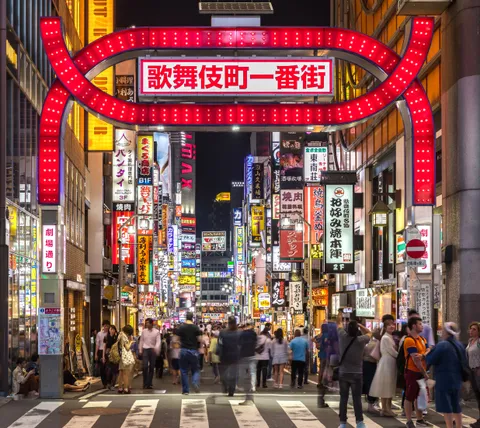
The one pricing trap to understand before you go: “¥1,000 for an hour!” signs on Kabukicho’s streets are loss leaders, or bait for a different, unregistered business. A licensed kyabakura in the middle of Shinjuku costs what it costs; anything priced ten times below the going rate is the warning sign, not the deal. The Kabukicho guide covers how street touting works around this.
Host club vs. hostess bar
Our host club guide covers the male-side version in detail. The useful comparison for a visitor:
| Hostess bar (kyabakura) | Host club | |
|---|---|---|
| Staff | Female hostesses | Male hosts |
| Typical customer | Men (anyone, really) | Women |
| Product | Conversation + drinks | Conversation + drinks |
| Legal category | Entertainment food-and-drink | Entertainment food-and-drink |
| First-visit deal | Common | Common (heavily marketed) |
Same legal frame, same transaction, mirrored genders. Both are entertainment, not sex work.
Can a foreigner go? Honestly, yes
This is the question with a genuinely good answer, which is rare in the nightlife industry. Kyabakura routinely take foreign walk-ins. Shinjuku’s district has decades of experience with visitors, and the mainstream format does not require an introduction the way the upscale Ginza tier does.
The real barrier is linguistic, not national. The product is conversation. You can absolutely sit down, order a set, and let the hostess practice her English — that genuinely happens and is usually fun — but the experience is what you make of the language gap. Practical tips:
- Say you’re a first-timer. Staff are trained to walk new customers through the set. It is the single best sentence you can bring.
- Ask for the total before the hour starts. “All-in ikura?” (how much all-in?) gets you the real number, and asking it early is normal, not rude.
- Cash. Most places expect cash at the end; cards are increasingly accepted but cash removes all friction.
- Don’t follow a tout. The street version of a hostess bar does not recruit from the pavement. Anyone who approaches you outside is the version of this industry you should avoid — this is the single biggest way visitors lose money in Shinjuku, and it is covered in depth in the Kabukicho guide.
The fake version, briefly
Because “hostess bar” is a phrase foreigners already half-mistrust, the scam version exists to cash in on that confusion: a tout brings you to a dim room, you are handed an outrageous bill, and a large man explains that you agreed to it. The defense is structural, not situational:
- A licensed kyabakura is a registered business with a visible address and a front door you found yourself.
- Nobody approaches you first.
- The price is stated in advance and itemised at the end.
- The establishment’s staff speak to you normally, because they run a real business.
If any of those four fails, leave. The whole safety section of the Kabukicho guide is written around exactly this pattern.
The bottom line
A hostess bar is the most ordinary nightlife business in Japan, and it is worth experiencing precisely because it is ordinary — a licensed, time-based conversation venue that is nothing like the two things foreigners assume it is. Budget ¥10,000 for the first hour, walk in through a door you chose, and let the hostess practice her English.
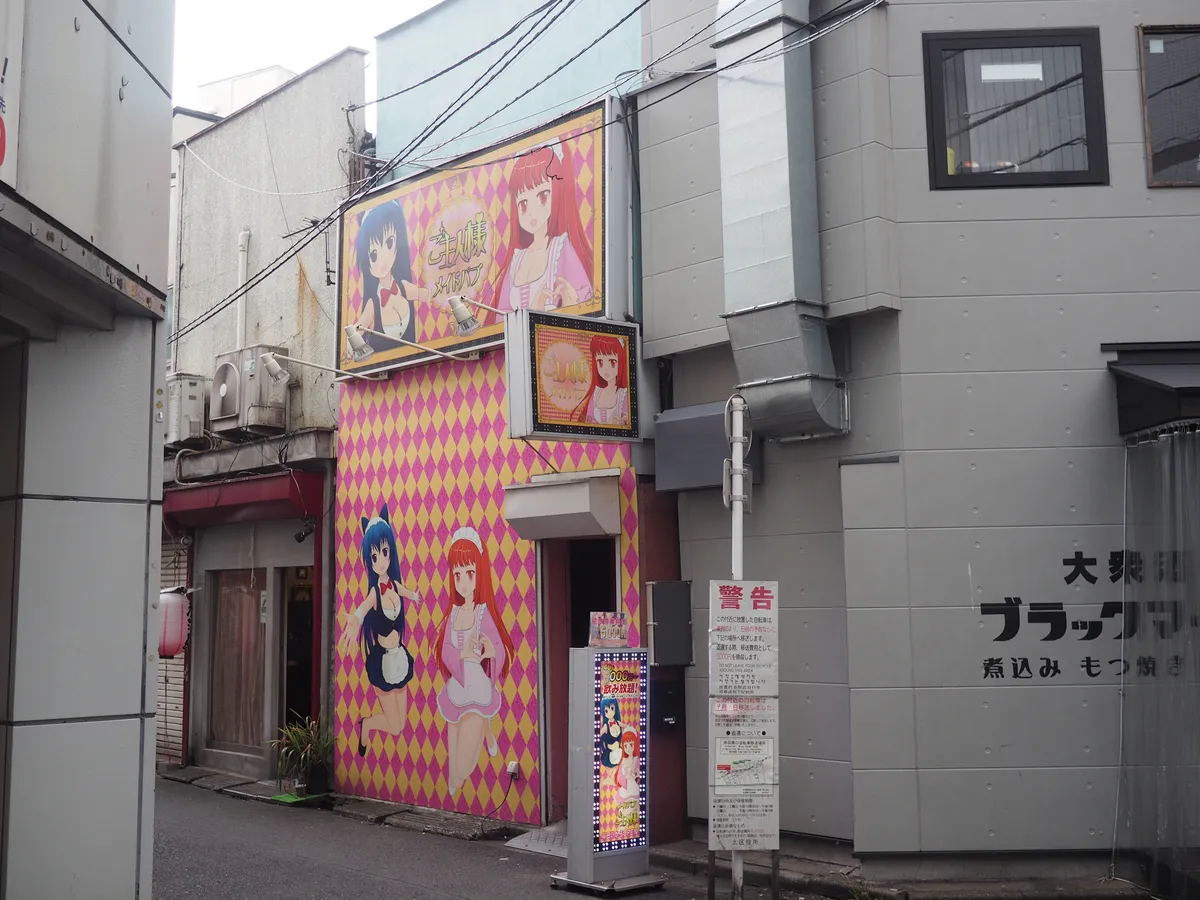
Photo: A hostess club in Akabane, Tokyo, 2020 by nakashi, Wikimedia Commons, CC BY-SA 2.0.
Sources: Wikipedia — Businesses Affecting Public Morals Regulation Act; Wikipedia — Kyabakura. Pricing bands are the working range across central Tokyo; always confirm the all-in before the hour starts.
Frequently asked questions
What is a hostess bar (kyabakura)?
A kyabakura (キャバクラ) is a bar where female staff (hostesses) sit with customers and chat over drinks. It is classified under Japan’s Entertainment Business Act as an "entertainment food-and-drink business" — the service is conversation and alcohol, nothing else.
How much does a hostess bar cost?
Most kyabakura charge by time: a one-hour set typically runs ¥5,000–¥15,000. On top of that come an entry/cover charge (¥1,000–¥3,000), a nomination fee if you request a specific hostess (¥1,000–¥5,000), and drinks if they are not included. A first hour with everything usually lands around ¥10,000.
What is the difference between a hostess bar and a host club?
A host club employs male hosts for predominantly female customers; a hostess bar employs female hostesses for predominantly male customers. Both sell conversation and drinks under the same legal category, and both are separate from the adult-venue (fuzoku) industry.
Can foreigners visit a hostess bar?
Yes, and more easily than the male-side host clubs. Kyabakura in Shinjuku and other tourist areas routinely take walk-ins regardless of nationality. The practical barrier is language — the entire product is conversation — so an English-friendly establishment or a phrase or two of Japanese changes the experience a lot.
Is a hostess bar part of the sex industry?
No. It is an entertainment food-and-drink business licensed under the Entertainment Business Act. Paid sex is prohibited by a separate law and is not part of the service. If an establishment offers otherwise, it is unregistered and should be avoided.

Written by
CHONMAGE
CHONMAGE publishes English-language explanations of Japan's nightlife and adult-entertainment topics. We distinguish sourced legal and operator rules from estimates; venue prices, access policies and eligibility should be checked with the operator before visiting.
Keep reading