Maria Ozawa (小澤マリア): The Eurasian Crossover Who Outgrew the Industry
Debuted on S1 in 2005, was in the industry's biggest studio group, went uncensored in 2008, and then became a regional celebrity across Taiwan, Indonesia and the Philippines — before quitting AV in 2010 to run businesses.

Contents
Maria Ozawa is the crossover case that makes every other crossover look local. A Japanese performer of Canadian-Japanese descent who debuted on the industry’s flagship label, went uncensored for the overseas market, and then outgrew the industry into a regional career across Taiwan, Indonesia and the Philippines.
Her retirement is the detail that frames the whole career: she did not leave with an announcement and a final title. She told a reporter in 2015 that she had simply quit five years earlier, around 2010, because she “had a dream and wanted to do it.”

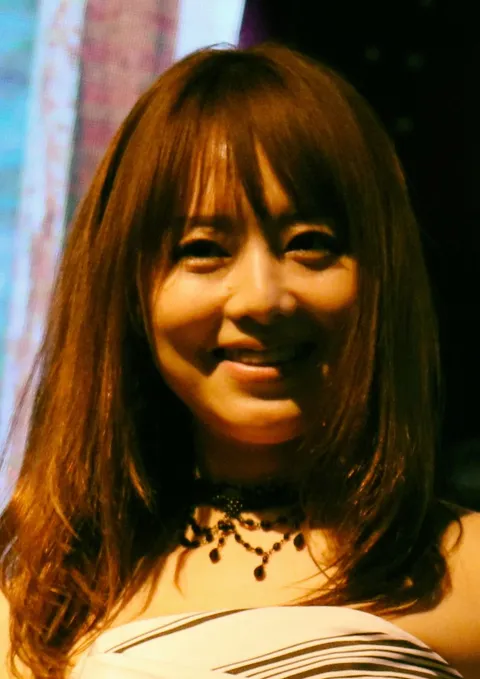
Maria Ozawa (2007). Photo: Wikimedia Commons「File:Maria Ozawa, 2007 (cropped).jpg」 (CC BY-SA 2.0, photo by LonelyBob)
.jpg)
The short version
| Name | Maria Ozawa (小澤マリア) · early model name Miyabi |
| Born | 8 January 1986, Hokkaido, Japan |
| Debut | 7 October 2005, S1 No. 1 Style |
| Studios | S1 → DAS → Attackers → Ran-maru (all Hokuto group) |
| Uncensored | 2006–2008, for the overseas market |
| Retired | Around 2010 (stated in a 2015 interview) |
| Status | Entrepreneur and regional celebrity |
| Now | Businesses in Japan and the Philippines; ongoing media work |
2005: a debut that was never going to be ordinary
Ozawa was born in Hokkaido in 1986 to a Japanese mother and a French-Canadian father, and educated at the Christian Academy in Japan, where she says her English reading and writing ended up stronger than her Japanese.
She was not scouted. A friend who worked in the industry introduced her, and she began modeling in June 2005 under the name Miyabi before signing with S1 No. 1 Style. She debuted as Maria Ozawa on 7 October 2005 in New Face – Number One Style, directed by Hideto Aki — the debut line of the studio that would become the flagship of the Hokuto Corporation group.
The Eurasian look was the entire point. Japanese AV rarely featured mixed-heritage performers, and S1 marketed her as the anomaly she was.
2007–2008: the studio moves
In early 2007, Ozawa left S1 with three other performers for the new studio DAS, which produced graphic creampie and simulated-rape content. By the end of the year she had signed non-exclusively with Attackers. In June 2008 she moved to Ran-maru.
All four studios — S1, DAS, Attackers and Ran-maru — belong to the Hokuto Corporation, the conglomerate whose structure our industry guide explains. So her career did not leave the group; it moved between its labels.
That year also brought her first mainstream film: Invitation Only (2008), billed as Taiwan’s first slasher horror, in which she played a supermodel and spoke both English and Japanese. The mainstream work that would define her later career began here.
2008: uncensored — the overseas-market anomaly
In September 2008, the overseas site XVN advertised Ozawa’s first uncensored titles — the ones without the mosaic that standard Japanese AV requires. Four 45-minute videos were released, later compiled into DVDs.
Two earlier uncensored titles predate them (both December 2006), which makes Ozawa an early example of what the censorship explainer describes: a performer whose work exists in both the regulated domestic form and the unregulated export form. The uncensored work was not a Japanese-market product; it was made for the overseas audience the standard format could not serve.
2009–2015: the regional crossover
This is where the career stops being about the industry.
- 2008 — cabaret show “Tokyo Nights” in Macau; Invitation Only released in Taiwan
- 2009 — an Indonesian film, Menculik Miyabi, was announced; religious objections forced the shoot to relocate to Tokyo, and it was released in May 2010
- 2010 — she quit AV, quietly, around this time
- 2011 — starred in the V-Cinema Erotibot
- 2012 — starred in Tokyo Species; announced a move into the Chinese mainland market
- 2015 — Nilalang, a Philippine horror film; the June 2015 cover of FHM Philippines; announced in an interview that she had left AV five years earlier
The geography is the story. Taiwanese horror, Indonesian comedy, Philippine action, FHM covers in multiple countries, radio appearances in Manila. She became a celebrity in Southeast Asia on a scale that the industry alone could not produce, and she did it with the crossover built into her from the start.
Since: the entrepreneur
Ozawa is now an entrepreneur running multiple businesses in Japan and the Philippines, and she still appears in mainstream media — as of 2026 on Filipino YouTube series and television. Her personal life is her own; the relevant public facts are the businesses and the continued media work.
The career worth noting against the industry’s other exits: Sora Aoi crossed into China, Yua Mikami into K-pop and consumer brands, Maria Ozawa into Southeast Asia’s entertainment economy. Three performers, three regions, same shape — the industry as a springboard rather than a ceiling.
What the career means
Two things.
First, the overseas market was part of the career from early on. Ozawa’s 2006–2008 uncensored titles and her Southeast Asian film work happened in parallel, not sequentially. She is the case that connects the domestic industry, the export market, and the mainstream crossover all at once.
Second, the exit was hers to make quietly. No announcement, no final-title ceremony — she stopped because she wanted a different career, and only confirmed it five years later in an interview. In an industry where most careers end when a contract is not renewed, hers is the rare one that ended because the person had somewhere else to go.
Related reading
- JAV actresses: how the career actually works — the debut routes and the tiers
- How Japan’s adult video industry works — Hokuto, S1, and the studios
- Why Japanese porn is censored — the mosaic and the export gap
- Sora Aoi — the crossover into China
Sources: English Wikipedia — Maria Ozawa. Career facts only; nothing here is sourced from fan wikis or aggregator biographies.
Photo: Wikimedia Commons「File:Maria Ozawa, 2007 (cropped).jpg」 (CC BY-SA 2.0, photo by LonelyBob). Used on the cover and in the article.
Frequently asked questions
When did Maria Ozawa debut in adult video?
She modeled from June 2005 under the name Miyabi, then signed with S1 No. 1 Style and debuted as Maria Ozawa on 7 October 2005 in New Face – Number One Style, directed by Hideto Aki.
When did she retire from AV?
She told reporters in 2015 that she had quit the industry five years earlier — around 2010 — to change careers. Her last adult video of 2010 was released in April 2010.
Why is she known outside Japan?
Her mixed Canadian-Japanese background made her an anomaly in the industry, and she crossed into mainstream media early: a Taiwanese slasher film (Invitation Only, 2008), an Indonesian comedy (Menculik Miyabi, 2010), a Philippine horror film (Nilalang, 2015), FHM covers, and television in Taiwan and the Philippines.
What studios did she work for?
S1 No. 1 Style (2005–2007), DAS (2007), Attackers (2007), Ran-maru (2008) — all part of the Hokuto Corporation group, the largest adult-video company in Japan. In 2008 she also filmed uncensored titles for the overseas market.
What does she do now?
She is an entrepreneur running multiple businesses in Japan and the Philippines, and has continued appearing in mainstream media. As of 2026 she still appears on Filipino YouTube and television shows.

Written by
CHONMAGE
CHONMAGE publishes English-language explanations of Japan's nightlife and adult-entertainment topics. We distinguish sourced legal and operator rules from estimates; venue prices, access policies and eligibility should be checked with the operator before visiting.
Keep reading
Related guides
Tsubasa Amami (天海つばさ): Fifteen Years as an IdeaPocket Exclusive, Now on Hiatus
Read the guide →
Azu Amatsuki (天月あず): The Rename-and-Return That Ended in a Job
Read the guide →