Yoshiwara Soapland: Reading a Shop Price Page Before You Go
Yoshiwara is a working soapland district in Taito ward, not a heritage site. What four shops actually displayed, what to verify, and where the law stops.
Contents
The English pages about Yoshiwara soapland usually open with the Edo courtesan quarter and then quote a price for “Yoshiwara”. There is no such price.
On 24 October 2026 we opened the price pages of four shops whose own addresses sit in Senzoku 4-chōme, Taito ward. They displayed money in four different ways. One published a labelled total across five course lengths. One published a bath fee and told you to phone for the service fee. One published a bath fee with a “from” mark and nothing else. One published a bare figure with no label at all.
A district has no price. A shop has a price list, and only sometimes does that list contain a total.
- Prices are what four named shops displayed on their own pages that day, not a district range
- Legal statements checked against e-Gov statute text and Tokyo Metropolitan Police pages
- No shop's customer policy is inferred from another shop's
Yoshiwara is an address, not an attraction
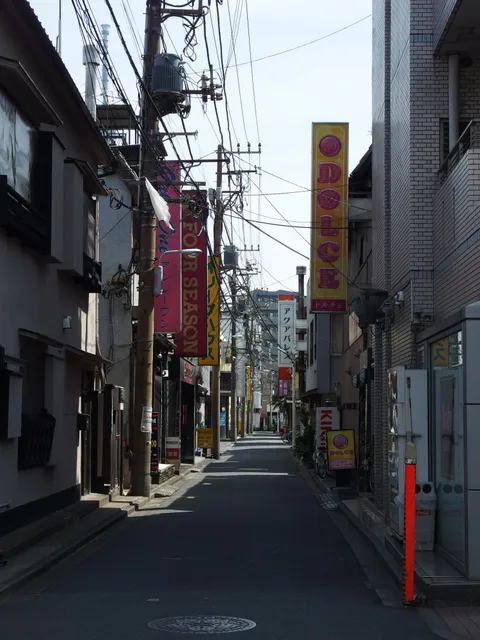
Every shop page opened for this article gives an address in 台東区千束4丁目: Happiness Tokyo Yoshiwara at 4-41-9, Cote d’Azur at 4-16-4, EXE at 4-17, Aqua Palace at 4-23-12. The old name survives on the bus stop and in shop names. It is not the address you give a driver; the shop’s 千束4丁目 one is.
The district’s function is written into police paperwork. Tokyo Metropolitan Police’s list of documents for a dispatch-type business (無店舗型性風俗特殊営業) adds a condition for operators who set up a reception office: within Tokyo, one may not be established anywhere except part of 千束4丁目. That single clause describes this block more accurately than any heritage plaque.
It is in the same ward as Asakusa, on the Senzoku side, and it is not a preserved quarter with a gate or a ticket window. People live in the surrounding streets, and two of the shops opened here publish requests about customer behaviour at their pickup points.
The heritage framing is not harmless. It sets you up to arrive without a booking, in a group, expecting to browse a street. What is there is a residential grid of buildings with doors, most of which do not take walk-ins.
Three words on a Japanese price page
Japanese price pages use a two-part vocabulary, and the parts are not interchangeable.
入浴料 is the bath facility charge. サービス料 is the service charge. 総額 is the total of the two. Around them sit 指名料 (nomination), 本指名料 (the higher fee for nominating someone you have seen before), 延長料 (extension) and オプション (options).
The split is not a web design quirk. The police definition of 店舗型性風俗特殊営業 1号, the category that covers ソープランド, describes 浴場業の施設として個室を設け、当該個室において異性の客に接触する役務を提供する営業: a bathing-industry facility with private rooms in which a contact service is provided to opposite-sex customers. Two elements, bath and service. A bill with two lines mirrors the category.
What the category does not do is set an amount, or make lawful anything the Anti-Prostitution Act prohibits. Merging the two statutes is how English explainers end up claiming an exemption no statute contains.
What four shops actually displayed
| Shop and page checked | Course lengths | 入浴料 shown | サービス料 shown | Total shown |
|---|---|---|---|---|
| ハピネス東京 吉原店, price page | 50, 60, 80, 110, 180 min | not separated | not separated | Yes. A row headed 総額: ¥20,000 / ¥25,000 / ¥32,000 / ¥43,000 / ¥66,000, with the footnote オールタイム・総額・税込み |
| EXE | 110 min | ¥25,000 | 別途サービス料が必要, amount only by phone | No |
| コートダジュール | 120 min | ¥25,000〜 | not stated | No |
| アクアパレス | 50, 60, 75, 90 min | no heading; one figure per course, split by time band and weekday | not stated | Not labelled |
Read the last column first. One page out of four answered “what will I pay”. The other three answered “what is the bath fee”, which is a different question with a smaller answer.
Happiness lists 延長30分 ¥10,000, 指名料 ¥2,000 and 本指名 ¥3,000, takes cards with no handling fee, and warns that paying by card voids event discounts. Cote d’Azur prices a 60-minute extension at ¥35,000〜 and two options at ¥3,000 each. Aqua Palace waives photo and online nomination, charges ¥2,000 for 本指名, and prices 50 minutes at ¥17,000 before noon on a weekday against ¥18,000 after. None of that is standard; each is one shop’s line item.
None of it adds up to a district range, and this page will not invent one: averaging different components at different course lengths would describe no shop and no booking. Aggregate “total price list” pages are compilations of operator listings, which is a different kind of document from a register. If you are handed one figure for “Yoshiwara”, ask which component it is.
How to check one shop before you travel
Pick the shop, not the district, and work through its own pages in this order: price page, Q&A page, reservation page, then the phone.
| Check | Where it appears | What to write down |
|---|---|---|
| Total for your exact course | row labelled 総額, otherwise ask | the figure, and the date you were told |
| Whether the figure is bath fee only | the heading over the table: 入浴料 or 総額 | which word the page used |
| Nomination | 指名料 / 本指名料 | amount, and whether it is waived when you do not nominate |
| Extension and options | 延長, オプション | per-30-minute rate, per-item rate |
| Time band or rank surcharge | 平日 / 土日祝 rows, rank rows | the band that covers your arrival time |
| Payment | クレジットカード note, 領収書 | card or cash, any fee, any discount lost by paying by card |
| Cancellation | キャンセル, 予約規定 | deadline and charge, or the fact that none is published |
| Age and ID | 18歳未満・高校生お断り, 身分証明書 | if your passport is the ID they accept |
| Language and eligibility | Q&A page, reservation page | a written reply on language and eligibility, kept |
Two of those rows are usually blank. None of the four price pages opened here states a cancellation deadline or a cancellation charge, and none states a nationality, residence or language rule. Silence is not a policy in either direction; the answer has to come from the shop.
The booking channel is where foreign visitors actually get stopped, and it is not the same thing as a foreigner policy. EXE’s price page ends its contact details with a note that bookings cannot be accepted from blocked numbers or international calls. Happiness’s Q&A answers the blocked-number question the other way, saying it can handle those calls, and asks for a phone number at booking. Neither sentence mentions nationality. A Japanese customer calling from Seoul hits EXE’s rule exactly as you would, and a visitor with a Japanese number clears it.
That is why “does Yoshiwara accept foreigners” is the wrong question to carry to a counter. The checkable version is: which channel does this shop accept a booking through, from where I am standing, and will it put the total in a written reply I can show at reception. Cote d’Azur accepts phone, LINE or email and takes bookings up to 60 days ahead, which is a usable answer for someone still abroad. EXE’s answer is usable only if you can call from a Japanese line.
One shop’s answer tells you about one shop. A refusal at one address, an acceptance at another, silence at a third: none of them is a district rule, and this page will not turn any of them into one.
Getting there, and when to arrive
The one transport fact checked against an operator rather than a shop is the bus. Toei route 上46 stops at a stop named 吉原大門, according to the Bureau of Transportation’s stop page; the page opened here showed the 南千住駅東口-bound direction.
The rest comes from the shops, and it is consistent enough to plan around. Cote d’Azur picks up at 日暮里駅 (north ticket gate, east exit) and at 三ノ輪駅, exit 3, opposite the convenience store. EXE picks up at 上野駅 (Park Gate) and 入谷駅. Aqua Palace picks up at 鶯谷駅 south exit. In each case you call when you arrive and staff tell you where to stand. A phone that works in Japan is part of the access plan, not an accessory. If your only channel is an international call and the shop refuses those, the district is reachable and the booking is not.
One honest limit: the Tokyo Metro and JR East station pages returned 403 errors to this check, so the line attributions above come from shop pages, not from the railway operators. And although the district is in Asakusa’s ward, none of the shops opened here named 浅草 as a pickup point. If you are staying in Asakusa, ask the shop which pickup to use instead of walking toward where you assume the district is.
Closing time is the wrong number to plan around. Happiness opens 7:30 to 24:00 and publishes a last reception per course: 23:00 for the 50-minute course, falling to 20:50 for the 180-minute one. A 180-minute booking at that shop has to start before nine in the evening to exist at the published total.
EXE runs 11:00 to 23:00. Cote d’Azur runs 9:00 to 24:00. Aqua Palace runs 9:00 to 23:00 with a 09:00–12:00 band and a 12:00–23:00 band, which is why its morning price is lower.
Booking lead times differ just as much. Happiness takes phone bookings from 15:00 the previous day and online bookings from four days ahead for new customers. EXE opens same-day bookings at 10:00 and otherwise three days ahead. The shop’s calendar decides, not yours.
Etiquette that is written down
Some of this is on the shops’ pages, which makes it checkable rather than folklore.
Do not wait on the pavement. Aqua Palace states that its meeting area drew complaints from local residents and asks customers not to wait in front of shops, houses or the shopping street. NewSky publishes a similar notice. Wait where staff told you to wait, and not in a group.
No cameras. Shops list photography of staff, recording and covert filming among prohibited acts. Do not photograph doors, staff or other customers.
Carry your passport. The police English visitor page states that all foreigners in Japan must carry proper documentation and present it when asked by an officer. Shops also check age and identity; Happiness states 18歳以上 and not currently in high school, and says identity documents are checked. That shop also serves no alcohol and allows none brought in.
No off-premises arrangement. Happiness’s Q&A says 店外デート is not possible, citing law. Read that as that shop’s rule about its own operation, not as a summary of the statute.
Do not negotiate at the door. If the figure at reception differs from the page, ask which line item changed. A vague answer is a reason to leave, not a reason to argue.
The tout problem
Tokyo Metropolitan Police are unusually direct about this. Their English visitor page, updated 22 May 2026, says street touts and rip-offs targeting foreigners are on the rise, describes victims being led to partner bars and overcharged, and ends: “Do not follow street touts under any circumstance.”
The law behind that warning is in the same statute as the prohibition. Article 5 of the Anti-Prostitution Act makes it an offence to solicit in a way the public can see, to stand in someone’s path or follow them in order to solicit, or to wait for customers or induce them by advertising: 六月以下の拘禁刑 or 二万円以下の罰金. The person doing the soliciting is the one exposed to that provision.
You are the one who can be walked to a different building and quoted a number that appears on no page. A tout cannot show you a shop’s price table. The verifiable price is the one on the page of the shop at the address you wrote down. Walk there.
Where the legal line sits
Two regimes, and they do different work.
The first is business regulation. The Tokyo Metropolitan Police’s business-type list places ソープランド in 店舗型性風俗特殊営業 1号. The notification page files that category under 営業所ごとの届出 and lists a 営業開始届出書 among the required documents, while 風俗営業 categories such as cabarets go through 許可申請. A notification describes premises, ownership and operating method. It is not a licence, and it is not a finding that everything that happens inside is lawful.
The second is the Anti-Prostitution Act. Article 2 defines 売春 as 対償を受け、又は受ける約束で、不特定の相手方と性交すること. Article 3 is one sentence: 何人も、売春をし、又はその相手方となつてはならない. No business category appears in it. The police English page puts the practical warning in plainer words, that any act of soliciting sex for payment is illegal, and links a leaflet titled “Buying Sex is Illegal”.
Penalties in that Act attach to conduct around the act: soliciting under Article 5, procuring under Article 6 at up to two years, and providing premises with knowledge under Article 11 at up to three years, or seven where it is done as a business. Notification is not permission. A shop’s paperwork does not convert a prohibited act into a permitted one, and no English-language guide, this one included, changes that.
This page does not describe how any shop structures its service. It does not assert that any named shop has broken the law, or that it has not. What it asserts is narrower: a notification describes a business, Article 3 prohibits an act, and the second does not follow from the first.
Before you go
Choose one shop. Open its price page and find the word 総額. If the word is not there, the number is a component, and you have not found a price yet.
Then call or message from a channel that shop accepts, ask for the total for your exact course and arrival time, ask if your passport is the ID they take, ask what happens if you cancel, and keep the reply. If any of those answers is missing, you have not verified anything, and the district is not the thing you would be gambling on. The individual shop would be.
Related reading
- Soapland Tokyo: visitor policies and price checks
- Is prostitution legal in Japan?
- Fuzoku business types explained
- Japan red-light district guide
Sources checked 24 October 2026: Anti-Prostitution Act, e-Gov (Articles 2, 3, 5, 6, 11); Tokyo police, business-type list; Tokyo police, 性風俗関連特殊営業 notification; Tokyo police fuzoku index; Tokyo police, For Visitors to Tokyo; Toei Bus, 吉原大門 stop; Happiness Tokyo Yoshiwara, system and Q&A; EXE, system; Cote d’Azur, system; Aqua Palace, system; NewSky, system.
Frequently asked questions
Where exactly is Yoshiwara?
In Taito ward, in the Senzoku 4-chome area. Every shop page opened for this article gives a 台東区千束4丁目 address. Yoshiwara is the name of the area and of a bus stop, not a postal address you can give a taxi driver.
How much does a Yoshiwara soapland cost?
This page did not measure a district price and does not publish one. On 24 October 2026 one shop displayed totals from ¥20,000 for 50 minutes to ¥66,000 for 180 minutes, while others displayed only a bath fee and quoted the service fee by phone. Ask for the total for your exact course.
Do Yoshiwara soaplands accept foreign customers?
Acceptance is set shop by shop and is often not stated at all. None of the four price pages checked here published a nationality or language rule. Two shops do publish booking-channel rules about blocked or international phone numbers, which is a different thing from a foreigner policy.
Is a soapland legal in Japan?
The business sits in a notified category under the Entertainment Business Act. Article 3 of the Anti-Prostitution Act separately says no person may engage in prostitution or be its counterparty. A notification describes a business; it does not make a prohibited act lawful.
How do I get to Yoshiwara?
A Toei bus on route 上46 stops at 吉原大門. Shops also name free pickups at 三ノ輪, 入谷, 鶯谷, 日暮里 and 上野, and you call from the pickup point so staff can tell you where to stand.

Written by
CHONMAGE
CHONMAGE publishes English-language explanations of Japan's nightlife and adult-entertainment topics. We distinguish sourced legal and operator rules from estimates; venue prices, access policies and eligibility should be checked with the operator before visiting.
Keep reading